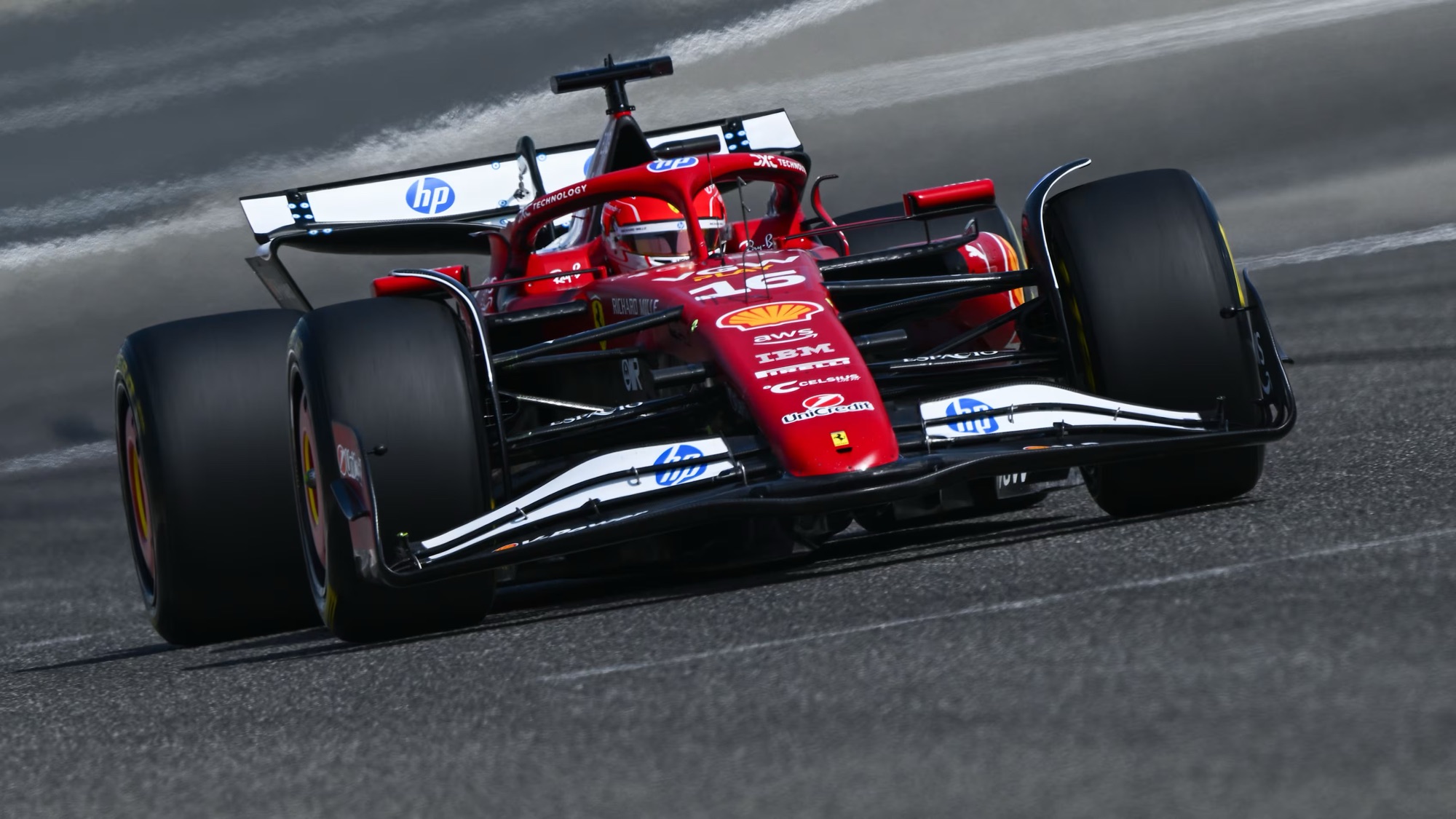

The F1 season starts right at pre-season testing, where lap times turn into prophecies for the fans. Nowhere does that prophecy echo louder than in Ferrari’s garage. It begs the question: is Ferrari’s F1 preseason testing truly as predictive as fans hope for it to be?
In the modern era of F1, the laps turned in February often dictate the stock market of fan expectation. For Ferrari, a team that has alternated between being a legitimate title contender, a struggling midfield occupant and a continuous rebuilding project over the last decade, the stakes of these early sessions are uniquely high.
Therefore, the central question of this analysis is whether the seasonal trajectory of Scuderia Ferrari can truly be mapped during the high-pressure environment of F1’s preseason testing. While testing provides a foundational baseline for mechanical potential, it remains only partially predictive.
The data from 2015 to 2025 suggests that reliability trends and the team’s reaction to regulatory shifts are far more robust indicators of success than the headline lap times that traditionally dominate the news cycle.
Year-by-year comparative analysis of Ferrari’s F1 preseason testing
2015: The resurrection of the Prancing Horse
The 2015 season served as the first major reset of the post-Alonso era. Maurizio Arrivabene took the leadership role during this time. Testing in Jerez and Barcelona showed a marked step forward in rear-end stability.
Technical director James Allison prioritised a “pretty” car to address previous drivability flaws during Ferrari’s F1 preseason testing. This testing outlook suggested a moderate improvement. That prediction directly translated into a successful campaign.
Sebastian Vettel secured three victories in Malaysia, Hungary and Singapore. He steered the team to a clear second in the WCC with 428 points. Therefore, testing accurately reflected a genuine technical leap. Ferrari became the only consistent thorn in Mercedes’ side.
They particularly thrived specifically in high-ambient temperatures where the SF15-T managed tyres better than the Silver Arrows.
2016: The mirage of winter speed
The narrative had shifted toward overestimation. Ferrari’s F1 preseason testing ended with them topping five out of eight days. These competitive signs led many to believe a Mercedes challenge was imminent.
However, the season resulted in a winless campaign. Strategic performance inconsistency marred the entire year. While they secured 11 podiums and finished P3 overall in the WCC, the testing data failed to account for operational friction.
A development plateau also caused them to fall behind Red Bull by the season’s end. The SF16-H was quick on a single lap but struggled with reliability and mid-season technical direction.
2017: Aerodynamic innovation and prophetic pace
The 2017 and 2018 campaigns represent the period where testing was the most prophetic.

In 2017, the SF70H arrived with a radical sidepod philosophy. This design immediately showed elite long-run stability in Barcelona. Ferrari’s F1 preseason testing correctly identified the rossa corsa team as a genuine title threat.
This reality held firm until reliability issues struck in Asia. A spark plug failure in Japan and a start-line crash in Singapore derailed the bid. However, Ferrari ended the season P2 with 522 points and five wins. Consequently, they proved that their initial concept was a masterpiece of the new wider-car regulations.
2018: A title challenge lost in the details
Similarly, in 2018, Ferrari was the fastest on paper in the winter. The SF71H was undoubtedly world-class. It was arguably the class of the field for two-thirds of the year. The car took six wins and secured P2 in the WCC with 571 points.
However, the eventual championship fade was less about the car’s baseline. Instead, it stemmed from high-pressure driver errors at Hockenheim. The team also struggled to match Mercedes’ in-season upgrade rate during the European summer.
2019: The cautionary tale of the “glory run”
The 2019 season remains the ultimate cautionary tale of the “Testing Mirage.” The SF90 was extremely fast in Barcelona. Because of this, the entire paddock declared them the favourite of the year.
However, the low temperatures of testing hid a fundamental lack of downforce. This “draggy” concept was brutally exposed once the spring heat arrived. While they took three wins and P2 overall, the season was defined by a controversial power unit. This unit faced legality scrutiny through several FIA Technical Directives. These directives led to a significant mid-season drop in performance.
2020: The Engine-Gate fallout
This led directly to the 2020 collapse. Mixed testing signals did not fully reveal the catastrophic loss of straight-line speed. This loss followed the FIA engine settlement. Eventually, testing revealed that the car was “draggy” and slow on the straights. This signalled Ferrari’s worst season in 40 years. They finished P6 in the WCC with zero wins and only 3 podiums.
2021: Quietly rebuilding the foundation
A conservative recovery began in 2021. Testing understated the team’s potential as they focused on power unit recovery. While they didn’t win a race, they secured five podiums and P3 in the WCC. They more than doubled their previous year’s points tally. Thus, testing accurately identified a car that was “solid” but not yet a winner.
2022: The Ground-Effect era
This era reset saw the F1-75 emerge as a testing titan. It was the class of the field in Sakhir. The car showed immediate front-running pace. While testing correctly identified the car’s baseline speed, it could not predict the future.

Reliability failures and strategic losses soon mounted. A hard-tyre gamble in Hungary saw a massive early lead evaporate. They finished the season a distant P2 with 554 points and four wins.
2023: The “peaky” reality
In 2023, testing again proved accurate. Inconsistent long runs and high tyre degradation mirrored the upcoming season. Ferrari was a clear step behind Red Bull. Despite a singular win in Singapore by Carlos Sainz Jr., the team finished P3. A car that was extremely sensitive to wind and setup changes hampered their efforts.
2024: Stability under Fred Vasseur
The 2024 campaign saw a strategic shift under Fred Vasseur. Testing was competitive but not dominant. The team focused on tyre management and predictability. This was perfectly mirrored in the results.
They earned five wins and 652 points. This was their highest ever total in the new ground-effect era. They finished P2 and only 14 points behind McLaren. Testing correctly identified that Ferrari had finally solved their chronic tyre-wear issues.
2025: The Hamilton hype vs hard data
Finally, the 2025 season brought the arrival of seven-time World Champion Lewis Hamilton. Testing indicated a hard car to master. Lewis Hamilton and Charles Leclerc showed speed but suffered from a narrow setup window.
They also recorded lower lap counts as compared to the other teams. Despite the immense hype, the SF-25 never entered the title fight. They finished P4 in the WCC. Hamilton failed to win a Grand Prix in a season for the first time in his career. This validated the “knife-edge” warnings seen in February.
Ferrari concluded the 2025 campaign with 487 Constructors’ Championship points. This represented a 165-point regression from their 2024 total. The average qualifying deficit to pole position stood at +0.247 seconds.
This was a significant increase from +0.118 in 2024. Reliability also deteriorated. Ferrari recorded six race retirements due to mechanical failures. This doubled their 2024 tally.
Development stagnation became evident after the European leg. Summer floor and sidepod revisions yielded only a 0.04s gain. Meanwhile, McLaren and Mercedes extracted gains closer to 0.12-0.15s. The early-season narrow window warnings translated directly into a sensitive car. It remained vulnerable to wind and ride-height variance throughout the year.
Cross-season trend analysis (2015-2025)
Correlation between testing rank and final championship position
A recurring “delta” exists between Ferrari’s F1 preseason testing and their autumn standing. Ferrari finished preseason testing ranked P1 on the timing sheets six times. These occurred from 2016 to 2019, 2022 and 2024. Despite this, their average final WCC position is 2.16. During this span, they achieved zero WCC titles.
The mean absolute deviation between testing rank and final finish stands at 0.82 positions. During regulation-stable cycles, the average deviation increases to 1.14 positions. In contrast, it drops to 0.5 during major regulatory resets. This supports the argument that Ferrari’s baseline concept is strongest under fresh rulebooks. However, it degrades under iterative development pressure.
Strikingly, a P1 winter ranking correlates more strongly with finishing runner-up than with winning. This statistical pattern reinforces the idea that Ferrari often peaks too early. They struggle to match the development curves of their closest rivals.
Reliability as a leading indicator for Ferrari’s F1 preseason testing
Testing mileage serves as the most accurate predictor of Ferrari’s seasonal attrition rate. Ferrari exceeded 600 laps in the testing during 2017 and 2024. This correlated with seasons where mechanical DNFs were significantly lower. Conversely, the 2022 season provided a “false positive”. Despite high testing mileage, the team suffered a high rate of power unit failures during the summer.

Mechanical concerns in testing accurately predicted race attrition in 2014 and 2020. In 2025, the team managed only 382 laps. This was one of their lowest totals in a decade. This directly foreshadowed a season of “system gremlins” and technical DNFs. These failures ultimately cost them P3 in the WCC to Red Bull.
Regulation rest vs Stable rule cycles
A distinct pattern emerges when comparing resets versus iterative years. During stable regulations, Ferrari often starts strong but plateaus by the European leg. For example, they closed the gap during the 2017 aero shift but struggled to maintain momentum in 2018.
The engine scrutiny of 2019 and 2020 also highlights a vulnerability. Performance plummeted following the Technical Directives. Testing can never account for this type of regulatory policing.
Ferrari excelled at the 2022 ground-effect reset. They initially produced the fastest car. However, as the rules stabilised, Red Bull out-developed them with aerodynamic efficiency. This confirms that Ferrari is a “concept powerhouse.” They are historically stronger at interpreting a blank sheet of paper than winning a war of attrition.
Development trajectory analysis
The Maranello Slope is a documented trend. Ferrari often enters the first race with a car capable of winning. However, that advantage evaporates by round 10. Mid-season upgrade effectiveness often fails.
In 2018, upgrades brought to Singapore actually slowed that car down. The team had to revert to an older spec. In 2023, the Spanish Grand Prix upgrade failed to fix peaky tyre degradation. The 2024 season under Vasseur broke this trend slightly. Late-season floor updates actually delivered a surge.
However, 2025 saw a return to form. Mercedes and McLaren introduced aero packages that Ferrari simply could not match. This led to their slide from P2 to P4.
Key findings of Ferrari’s F1 preseason testing
The data shows an in-season development gap. On average, Ferrari loses approximately 0.15 seconds of relative pace to their primary rival. This occurs between the season opener and the mid-season break.
Thermal insensitivity also plays a role. Cooler track temperatures in Barcelona or Sakhir often inflate Ferrari’s testing pace. When track temperatures exceed 40 degrees Celsius, the race-pace correlation drops by 20%.

The 2024 season suggested a “Vasseur Shift.” It was the only year where the final WCC position matched the testing reliability rank. This suggests a new era of “honest” testing.
Finally, operational variables remain invisible in preseason data. Strategy and pit wall execution account for a deviation of roughly 45-60 points per season.
Ferrari’s F1 preseason testing is moderately predictive but highly context-dependent. It serves as a reliable map for a car’s mechanical baseline. However, the media frequently overinterprets these results.
As we move into the 2026 regulations, the lesson from the last decade is clear. Speed in February is merely a suggestion. The final result is written in the consistency of the factory and the discipline of the pit wall.
[Feature Image Credit: Formula One]
About The Author

Leave a Reply