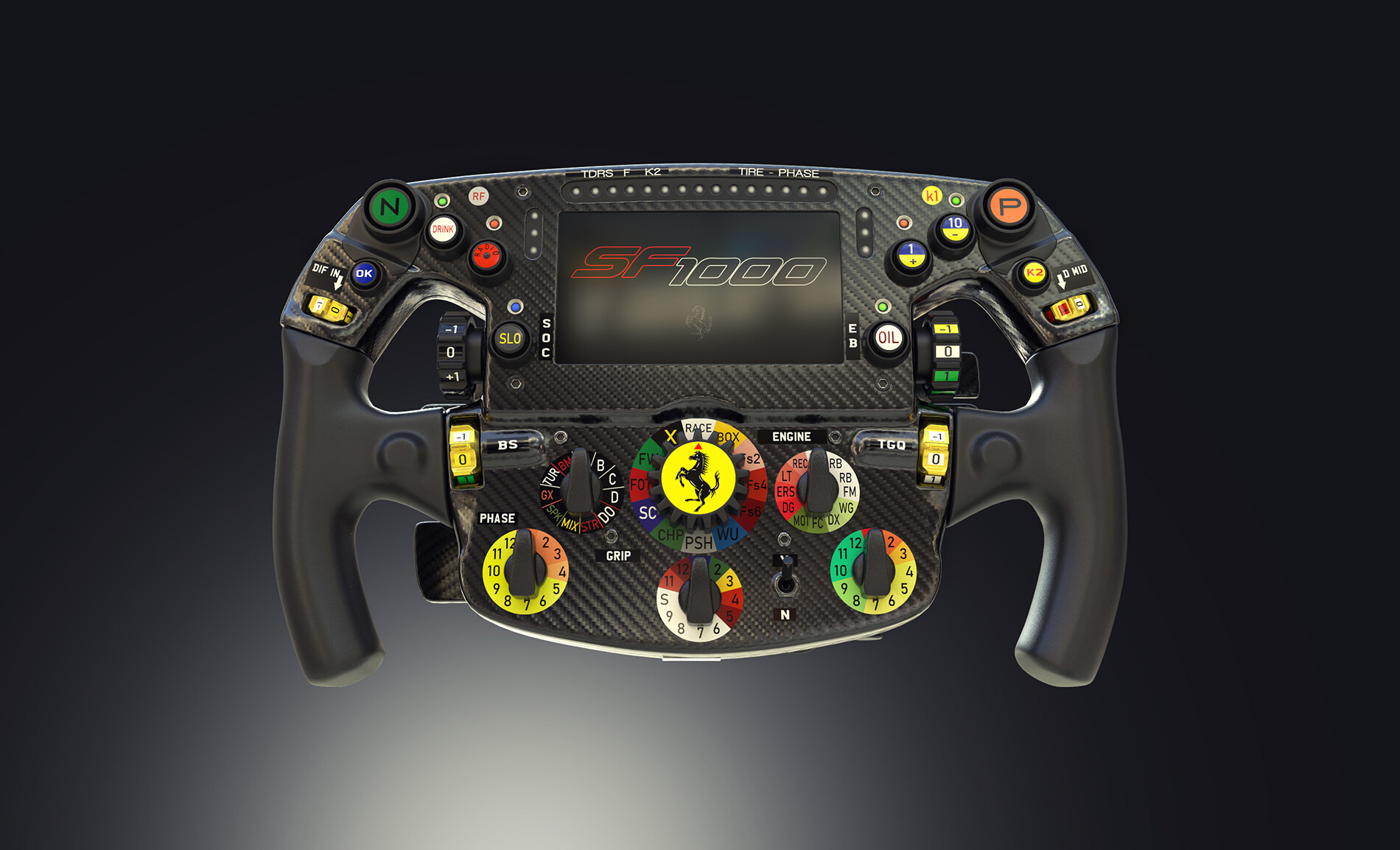

When most people think of a Formula One car today, their minds go straight to the aerodynamics, the roaring engines, or the intense wheel-to-wheel battles. But one of the most overlooked, and most important, components sits right in front of the driver: the steering wheel.
Today’s Formula 1 steering wheel is a piece of advanced technology worth tens of thousands of dollars, packed with switches, screens, and systems, but it wasn’t always this way. The story of how the steering wheel evolved in Formula One mirrors the sport’s own journey from raw mechanics to cutting-edge engineering.
The Early Days: Pure Simplicity
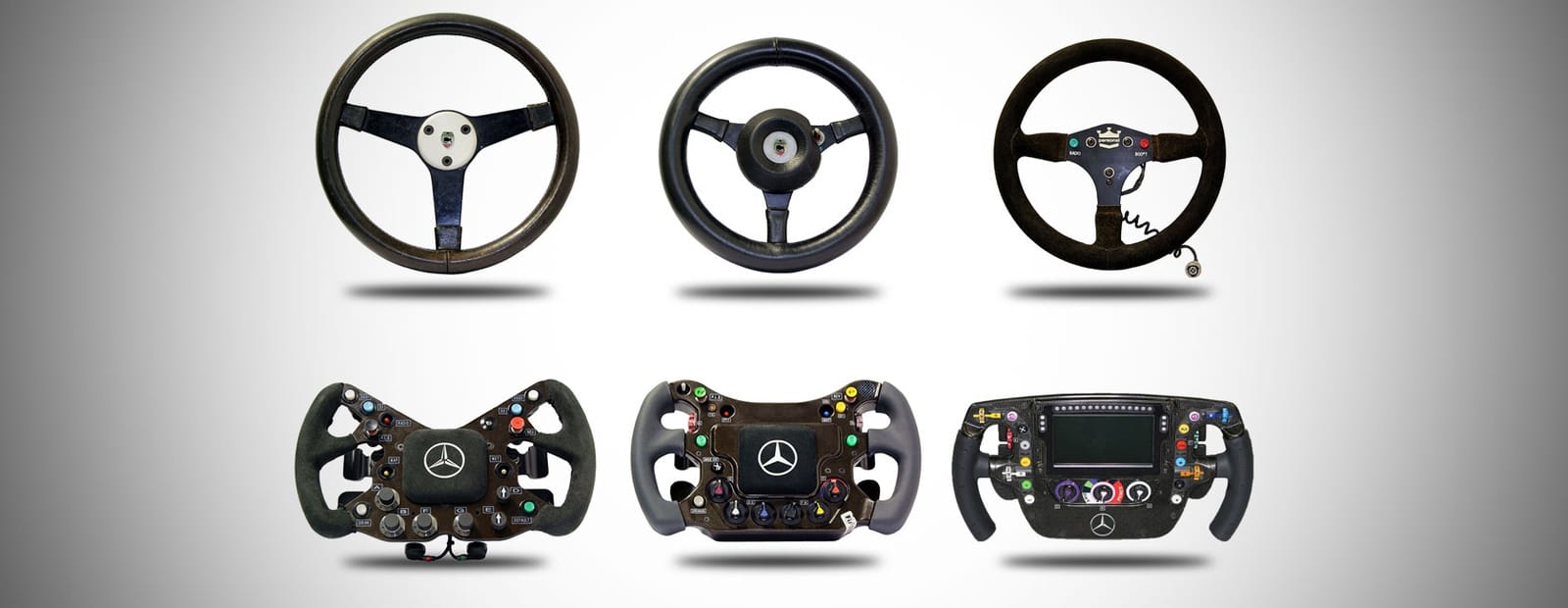
In the 1950s and 1960s, steering wheels were exactly what you’d expect: simple, round, and built with functionality in mind. Typically made from wood or thin metal and wrapped in leather, they had no buttons, screens, or electronics. These were large wheels that gave drivers the leverage they needed to wrestle heavy, manual cars around the circuit.
There were no radios, no power steering, and no paddles. Drivers relied purely on mechanical feel and instinct. It was a raw, physical era of racing, where the driver’s connection to the car was as direct as it gets.
The 1980s: The First Signs of Change
By the 1980s, Formula One began moving into the electronic age. Small changes appeared on the steering wheel, most notably the addition of radio communication buttons, allowing drivers to talk to their engineers mid-race.
The end of the decade brought a major innovation: Ferrari introduced paddle shifters behind the wheel in 1989. This allowed drivers to change gears without taking their hands off the wheel, dramatically improving control and shifting speed. The steering wheel, for the first time, became more than just a tool for steering: it became part of the car’s performance system.
The 1990s: Control at the Fingertips
The 1990s marked a turning point. Teams like Williams and McLaren began adding multiple switches and buttons for adjusting key car settings, including fuel mixture, brake bias, and differential settings. With the appearance of digital displays drivers were able to get more real-time data than ever before.
By the mid-90s, the steering wheel had become the main interface between the driver and the car’s growing number of electronic systems. It was no longer a passive tool, but an active control center. Drivers had to learn how to manage not just their pace, but their energy, fuel, and car balance. Imagine doing that while fighting for position at over 300 km/h!
2000s–2010s: The Wheel Becomes a Computer
As Formula 1 embraced hybrid technology and increasingly complex engine maps, the steering wheel evolved into a full-blown command unit. Traditional round designs gave way to compact, rectangular shapes, optimized for cockpit space and ergonomics.
A modern steering wheel now features more than 20 inputs: buttons, rotary switches, toggle controls, clutch paddles, and more. Displays became brighter, more detailed, and capable of showing everything from lap deltas to battery deployment status.
With the arrival of KERS and later ERS, drivers had to manually manage energy recovery and deployment during a race. Modes for engine power, tyre compounds, brake settings, and pit strategies could all be controlled without lifting a hand from the wheel. The amount of information drivers processed mid-race became staggering.
It was during this era that teams also began coding hidden commands: secret combinations that could unlock temporary performance boosts (Mode 7) or override systems (Overtake button).

2020s–2025: A Precision Tool for Modern Racing
Today’s Formula One steering wheels are engineering masterpieces. Each one is custom-moulded to fit the driver’s hands, built from carbon fiber for lightness and strength, and packed with technology. Some are estimated to cost over $50,000 each.
Key features include:
- A high-definition screen showing lap data, telemetry, tyre status, temperatures, and more
- More than 25 different inputs: buttons, rotaries, and toggles for everything from fuel mix to differential settings
- Dual clutch paddles for perfect race starts
- Radio and pit confirmation buttons
- DRS and energy deployment controls
- Quick-release functionality for emergencies
Drivers now spend hours in simulators not just learning the tracks, but memorizing every control on their steering wheel. Precision and muscle memory are essential, especially during races where each millisecond can make the difference between a victory or a loss.
What’s Next?
As Formula 1 continues to push the boundaries of technology, there’s speculation about what the next generation of steering wheels might look like. Some engineers envision gesture-based inputs, haptic feedback, or even augmented reality heads-up displays built into helmets.
But for now, the steering wheel remains the driver’s main control interface, the bridge between human instinct and mechanical precision.
The evolution of the Formula One steering wheel tells a broader story about how far the sport has come. From wood and leather to carbon fiber and LCDs, this once-simple tool has become one of the most advanced pieces of equipment in modern motorsport.
It may not be as flashy as a DRS overtake or a last-lap lunge, but the steering wheel is where technology meets talent. And in today’s Formula 1, mastering it is just as important as mastering the track.
Written by Jessica.
Featured Image Credit: cdnb.artstation.com
About The Author

Leave a Reply