
After the Berlin ePrix at the start of May, the championship landed in Monaco for a historic weekend as the iconic street circuit hosted its first-ever double-header. With two races taking place across the weekend, the event promised even more drama, strategy, and excitement in one of motorsport’s most prestigious locations.
16th May
FP1
The opening practice session for the 2026 Monaco E-Prix marked Formula E’s return to the full Monte Carlo circuit for the first half of the double-header weekend. Drivers immediately pushed hard despite limited practice time, with the narrow streets and changing grip levels creating a tense and technical opening session. Teams focused heavily on energy management, braking stability, and finding confidence through Monaco’s famous corners such as Sainte Dévote, Casino Square, and the Swimming Pool section.
The early pace remained extremely close, continuing the trend seen throughout the 2025/26 Formula E season. Several manufacturers traded fastest laps as the track evolved quickly during the session. Drivers repeatedly complained about low grip and traffic, which proved especially challenging in Monaco because finding clean laps was difficult on such a short street circuit. Commentators highlighted how important qualifying would be, since overtaking opportunities remained limited even with Formula E’s aggressive energy strategies.
Jaguar, Porsche, DS Penske, and Nissan all looked competitive during the session, with experienced Monaco specialists immediately appearing comfortable around the circuit. Mitch Evans and Nick Cassidy again attracted attention for Jaguar’s strong efficiency and balance, while Pascal Wehrlein and António Félix da Costa looked sharp through the high-speed sections. Oliver Rowland also showed promising pace for Nissan as the championship fight continued to tighten heading into the Monaco weekend.
A major talking point throughout FP1 was how important tyre preparation and energy deployment would become later in qualifying and the race. Engineers repeatedly discussed how Monaco’s tight layout punished even small setup mistakes, especially when braking into the Nouvelle Chicane and Rascasse. Overall, FP1 established a highly competitive field, with multiple teams appearing capable of fighting for pole position heading into FP2 and qualifying.
FP2
FP2 for the 2026 Monaco E-Prix saw the intensity increase significantly as teams transitioned from setup work into full qualifying preparation. Grip levels improved noticeably compared to FP1, allowing drivers to push harder and produce faster lap times around the Monte Carlo streets. The session became much more aggressive as drivers searched for qualifying pace while balancing Formula E’s complex energy management systems.
Jaguar emerged as one of the standout teams during the session. Mitch Evans topped the timesheets ahead of teammate Sam Bird, reinforcing Jaguar’s reputation for strong street-circuit performance. Their cars looked especially stable through Monaco’s rapid direction changes and traction zones, with commentators repeatedly praising the team’s balance and efficiency. António Félix da Costa also impressed by finishing near the front and continuing DS Penske’s strong weekend pace.
Several drivers experienced close calls with Monaco’s barriers as confidence levels rose throughout FP2. Lockups into Sainte Dévote and the Nouvelle Chicane became more frequent, while traffic once again caused frustration for drivers attempting qualifying simulations. Despite the increased aggression, the session avoided major incidents apart from a brief red flag period caused by a stopped car.
Overall, FP2 suggested Jaguar entered qualifying as one of the favourites after showing both single-lap pace and strong consistency. However, Porsche, DS Penske, Nissan, and several midfield teams remained close enough to create an unpredictable qualifying battle. The session reinforced how competitive the 2026 Formula E field was heading into one of the championship’s most prestigious weekends.
Qualifying
Zane Maloney did not take part in qualifying for the Monaco E-Prix after sustaining brake issues during FP2, which resulted in his crash at Beau Rivage. The Lola Yamaha ABT team continued repairs on the car and elected to sit Maloney out of qualifying as a precaution while further checks were carried out on the braking system.
Meanwhile, Edoardo Mortara also did not start qualifying after encountering technical issues with his Mahindra. As neither driver set a representative qualifying time, both Mortara and Maloney started from the back of the grid for the Monaco E-Prix.
Qualifying started with two groups. In Group One, Pascal Wehrlein, Maximilian Günther, Nico Müller, and Dan Ticktum advanced to the duels. Wehrlein faced Ticktum, while Günther faced Müller. In Group Two, Joel Eriksson, António Félix da Costa, Nyck de Vries, and Mitch Evans also made it through to the duels. Evans competed against Eriksson, while da Costa took on de Vries.
In the quarterfinals, Günther, Ticktum, de Vries, and Evans progressed to the semifinals. There, Günther went head-to-head with Ticktum, while de Vries battled Evans for a place in the final. The final saw Ticktum take on de Vries, with Ticktum claiming pole position in Monaco and earning three valuable points.
Race One
As the lights went out, Ticktum led the field away at the start of the Monaco ePrix. Chaos unfolded immediately on lap one when Evans suffered a puncture following contact with Pascal Wehrlein, which dropped Evans down the order early in the race.
By Lap Four, there was major drama between Cassidy and Dennis after the pair collided. The incident caused suspension damage to Cassidy’s car and brought out the Safety Car. In an effort to help the Safety Car period end sooner, Dennis moved his damaged car off the racing line and escaped through the runoff area before eventually retiring from the race. Cassidy was able to continue but headed into the pit lane for tyre changes and a new front wing.
Racing resumed with drivers quickly returning to energy-saving mode while fighting for position around the tight Monaco streets. On Lap 11, Nico Müller made an aggressive move on Joel Eriksson to take seventh place. Two laps later, Cassidy received a 10-second penalty for causing the earlier collision with Dennis.
A yellow flag was deployed on Lap 13 due to debris on the circuit, while Wehrlein’s race also began to unravel after he suffered a puncture, sending him tumbling down the order. On Lap 14, championship contender Rowland then suffered his own puncture, adding even more unpredictability to the race.
From Lap 15 onward, strategy became focused around Attack Mode activations, with drivers trying to balance energy management and track position. The field remained tightly packed as several drivers cycled through their Attack Mode phases.
Late drama arrived on Lap 27 when da Costa crashed, bringing out another yellow flag. The incident was later judged to have been caused by Ticktum moving too far to the left while defending position. Following the race, Ticktum was handed a 33-second time penalty for the collision, promoting Pepe Martí up the order to third. De Vries won the first Monaco ePrix.
Top Ten
Top ten finishers after penalties applied.
- Nyck de Vries
- Mitch Evans
- Pepe Martí
- Felipe Drugovich
- Sébastien Buemi
- Joel Eriksson
- Taylor Barnard
- Lucas di Grassi
- Nick Cassidy
- Maximillian Gunther
17th May
FP3
Formula E returned the next day to the streets of Monte Carlo for FP3 ahead of Round 10 for the double-header, with drivers immediately pushing the limits around the tight and unforgiving circuit after Saturday’s chaotic race.
Teams focused heavily on qualifying simulations and energy management during the session, while several drivers brushed the barriers as they searched for extra pace around the iconic Monaco layout. Mahindra once again looked competitive after Nyck de Vries’ victory in Race One, while Jaguar, Porsche, Nissan, and Cupra Kiro remained firmly in the fight near the top of the timesheets.
Following the drama of the opening race, attention was also on drivers recovering from incidents and punctures from Saturday, with teams making overnight repairs before returning to the track. As the session progressed, lap times continued improving, with track evolution playing a major role around the Principality.
FP3 ultimately served as the final preparation for qualifying, with the field appearing extremely close once again ahead of Round 10 of the Monaco ePrix.
Qualifying
Qualifying started with the two groups. In Group One, Ticktum, Mortara, Evans, and Drugovich advanced to the duels. Evans faced Mortara, while Ticktum faced Drugovich. In Group Two, Barnard, Rowland, Vergne, and da Costa also advanced to the duels. Vergne competed against Rowland, and da Costa took on Barnard.
In the quarterfinals, da Costa, Vergne, Mortara, and Ticktum progressed to the semifinals. There, Ticktum went head-to-head with Mortara, while Vergne battled da Costa for a place in the final. The final saw Ticktum take on da Costa, with Ticktum claiming pole position in Monaco and earning him another three valuable points.
Race Two
Ticktum led the field away at the start of the Monaco ePrix, but drama unfolded again immediately on Lap 1. António Félix da Costa was spun around by Edoardo Mortara at Turn 10 after da Costa slowed slightly, while Mortara defended from the car behind. The incident sent da Costa into a spin and later earned Mortara a 10-second time penalty.
On Lap 6, a yellow flag was deployed after Nato stopped on the start-finish straight following contact with Barnard. Barnard moved into Nato, sending the Nissan driver into the barrier and leaving his car stranded on the straight. Da Costa also made contact with the barriers during the chaos but was able to continue. Barnard was later handed a 10-second penalty for causing the collision.
During the same lap, Müller made huge progress through the field, gaining ten positions to move into the lead of the race. By Lap 11, Evans managed to edge past Müller to take first place.
A thrilling battle for second unfolded on Lap 14 as Mortara and Müller ran side-by-side. Felipe Drugovich capitalised on the fight perfectly, slipping past both drivers to snatch second place in a move Ticktum could also have benefited from.
Further down the field on Lap 16, Dennis and Barnard were locked in an intense wheel-to-wheel battle. One lap later, Müller brushed the wall near Wehrlein but managed to keep his car going. Sébastien Buemi suffered a puncture, while Vergne picked up front wing damage, and smoke was seen coming from his car.
Cassidy and Martí both visited the barriers later in the race, bringing out another yellow flag, although both drivers initially continued. The yellow flag period ended on Lap 20, but Martí later retired from the race. Barnard’s difficult race worsened on Lap 23 when he received another 10-second penalty. Ticktum was also penalised, receiving a five-second penalty for speeding under Full Course Yellow conditions.
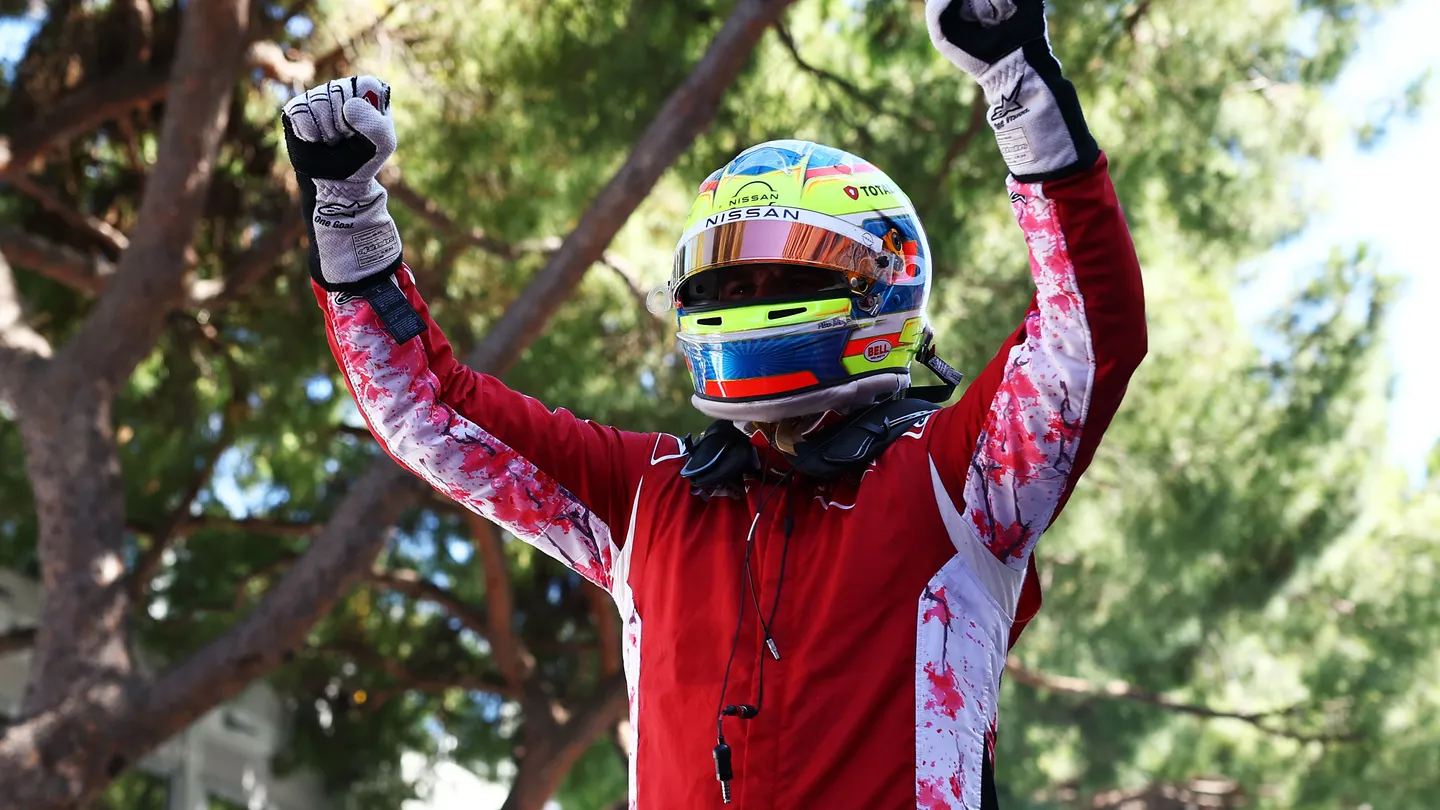
Another yellow flag was deployed on Lap 26 after Barnard crashed into the barriers. Despite the incident, he managed to get the car moving again before the yellow flag period ended on Lap 27. At the chequered flag, Rowland claimed victory in the Monaco ePrix after surviving a chaotic and incident-filled race around the streets of Monte Carlo.
Top Ten
- Oliver Rowland
- Felipe Drugovich
- Antonio Felix da Costa
- Mitch Evans
- Edoardo Mortara
- Nico Muller
- Joel Eriksson
- Nyck de Vries
- Lucas di Grassi
- Zane Maloney
Mitch Evans now leads the driver’s championship standings. Formula E heads to Sanya for the Chinese ePrix on 20th June for one of the three Chinese ePrix this season.
Feature image credits: Formula E
About The Author


Leave a Reply