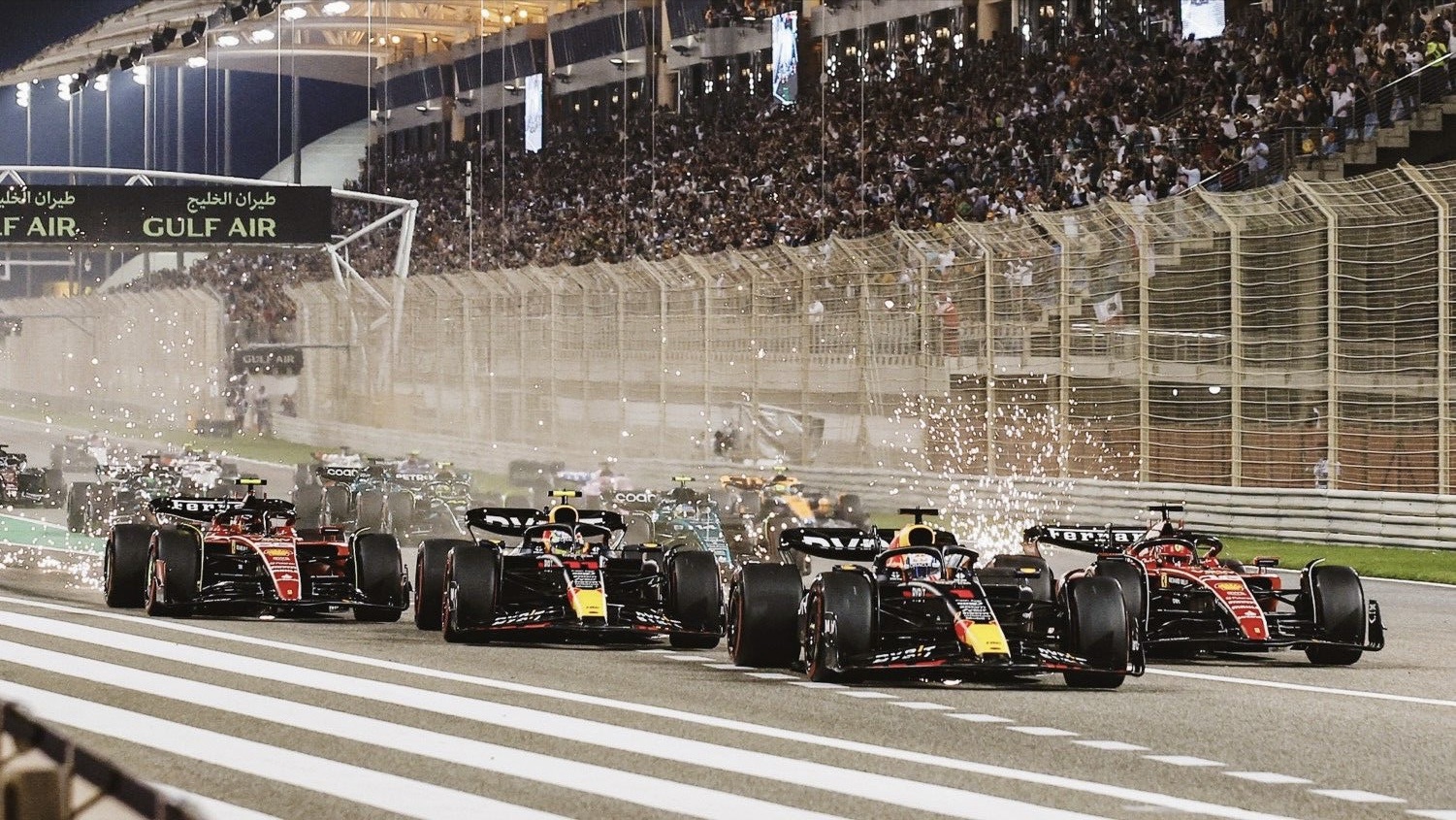

Formula One’s commercial explosion is reaching new heights, and the most recent stats are nothing short of spectacular.
According to recent evaluations, Ferrari leads with $6.5 billion (€5.69 billion), followed by Mercedes at $6 billion (€5.25 billion) and McLaren at $4.4 billion (€3.85 billion). Even Haas is now valued at $1.5 billion(€1.31 billion), with the average grid team across the paddock currently worth roughly $3.6 billion (€3.15 billion).

Just a year earlier, the average was around $2.3-2.4 billion (€2.01–€2.10 billion). This indicates a significant growth in a single year, with more than doubling since 2023. The entire grid is now collectively worth well over $34–36 billion (€29.75–€31.50 billion).
With investors racing to get into F1, the ten teams on the grid are now worth $3.6 billion on average, and the leaders of the pack even outpace some NFL and NBA franchises. –Forbes (2025 valuations)
The Drivers of Rapid Growth
The change has been truly remarkable. The average club valuation in 2024 was approximately $2.31 billion (€2.02 billion). It was roughly $1.61 billion (€1.41 billion) two years ago.
The cornerstone for this profitability shift was the cost cap initially introduced in 2021. It reduced excessive spending, transformed many mid-field teams from long-term financial losers into steady, successful enterprises, and levelled the financial playing field, which improved on-track competitiveness by closing the gap between big-budget teams and backmarkers.

Liberty Media’s stewardship since 2017 has supercharged the sport through savvy media deals, heavy investment in the US market, and events like the sold-out Las Vegas Grand Prix. In 2025, Formula 1 generated $3.9 billion (€3.41 billion) in revenue (up 14%), with strong gains in attendance (6.75 million fans) and viewership.
Teams are generating serious revenue too. Mercedes, for example, reported $799 million (€699.13 million) in revenue with $202 million (€176.75 million) in operating profit in one recent year. Prize money distribution further rewards historic performers, Ferrari benefits from a significant legacy bonus while overall payouts exceeded $1 billion (€875 million).
McLaren’s valuation surge ties directly to on-track success, whereas Ferrari commands a premium thanks to its unmatched brand prestige and fanbase, even in seasons of relative struggle. [as reported by Forbes]
Driver Salaries Keep Pace
In line with the sport’s rising commercial importance, drivers also receive large sums of money. With a reported basic salary of $70 million (€61.313 million), Max Verstappen is in the lead and could earn up to $76 million (€66.568 million) with performance bonuses.

With a package worth between $60–70 million (€52.50–€61.25 million), Lewis Hamilton of Ferrari is not far behind thanks to his unparalleled global popularity. Drivers like Lando Norris and Charles Leclerc command agreements in the $30–35 million (€26.25–€30.62 million) bracket farther down the grid, and even mid-tier talent now land multi-million contracts that were unimaginable ten years ago.
These salaries are a reflection of the sport’s transition into mainstream entertainment as well as its enormous commercial appeal, sponsorship pull, brand alliances, and on-track skill.
{Crucially, these soaring figures are completely excluded from the official F1 team cost cap regulations, giving teams total financial freedom to bid for elite talent without compromising their car development budgets}
Driver marketability has emerged as a major source of income for both teams and the F1 series as its audience expands, particularly among younger and more diverse fans. To maximize their unprecedented revenues, most of the grid’s top earners legally protect their wealth by setting up official residency in tax havens such as Monaco, where they pay no personal income tax on their large salaries and global endorsements.
The Wonders of This Era and the 2026 Horizon

This newfound income directly improves the fan experience by improving production values, increasing events, and accelerating digital growth, resulting in higher interaction across platforms and attracting new audiences, notably younger viewers and female fans. The outcome is an immersive, more approachable show that maintains the fast-paced action at the forefront.
With Cadillac joining as the eleventh team, the 2026 season brings significant regulatory changes, including new power unit regulations, smaller and more agile cars, and an expanding grid.

Recent returns from Ford and Honda, along with well-known manufacturers like Audi, indicate new investment and technological advancement. Team valuations may change as a result of these developments, which present both opportunity and risk.
F1 has grown from a niche passion to a huge global entertainment and investment property, all while providing the high-speed drama that fans demand. The sport is positioned for long-term relevance thanks to social and digital growth as well as sustainability initiatives aimed at achieving net-zero goals.
Challenges and Risks Ahead
Of course, challenges remain, maintaining competitive balance is critical as one-team dominance would diminish fan enthusiasm overtime (been there, felt that).
While the cost cap has helped to narrow financial disparities, it is debatable whether it has entirely achieved on-track parity. Despite the cap, the ’26 requirements mandate significant upfront investment. If rising costs are not addressed, they may eventually put a strain on ticket pricing and fan accessibility.
Teams continue to rely on the commercial success of Liberty Media and the stability of the recently (extended) Concorde Agreement. Additionally, some analysts point out high valuation multiples and wonder if the current boom pricing introduces overvaluation risk or offers little upside. Entry fees and anti-dilution payments, such as Cadillac’s contribution, emphasise both the substantial obstacles and the perceived value.
Looking ahead, an 11th team might gradually reduce prize money shares, and the new rules might upend the valuation hierarchy by rewarding teams that quickly adjust to technical changes.
The Road Forward
Not only is F1’s business surviving, but it is flourishing. The trajectory is promising due to new media collaborations (such as the US Apple TV contract),

possible market expansion, increasing digital engagement, and a pipeline of new technological and regulatory evolution.
The sport we love is bigger, richer, and more dynamic than ever before.
Formula 1’s golden era is providing fast-paced thrills both on and off the track for fans, investors, and teams alike.
{Footnote: All financial figures have been converted from USD ($) to EUR (€) using a fixed reference exchange rate of $1 USD = €0.875 EUR.}
Featured image credit: Pinterest
Edited by Alexandra.
About The Author


Leave a Reply