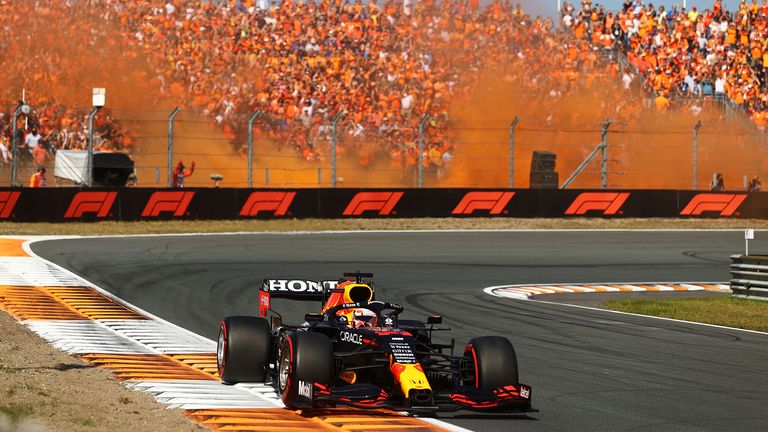

On Sunday, the grandstands at Zandvoort turned orange one final time. Max Verstappen’s home fans packed the dunes for a Dutch Grand Prix that organisers had already confirmed would be the last. It was a farewell built around the idea of going out on a high rather than being pushed out the door.
It’s the kind of send-off that makes for good television and better headlines. An ‘iconic chapter’ closing, a beloved circuit disappearing from the calendar just as its home hero continues his prime.
Coverage almost always tells F1 circuit exits this way. A track leaves the calendar, and the story becomes one of loss – heritage, romance, a sport forgetting where it came from. The real mechanism rarely makes the headline.
A hosting fee the promoter could not cover. Or a contract nobody renegotiated. It could even be a funding model with no government backing behind it at fault. The media keep selling F1 circuit exits to fans as culture casualties. Almost none of them are.
That distinction is very important. If a circuit falls off the calendar because nobody loves it enough, sentiment fixes it. That includes petitions, nostalgia campaigns and a driver saying the right thing in a press conference. If it falls off because the commercial terms never worked, only a structural fix will do.
Other circuits have already found that fix. Sorting F1 circuit exits into the right category decides whether the next at-risk venue gets saved or just gets mourned.
The Heritage-Loss Script

For instance, Imola. F1 dropped the Emilia-Romagna Grand Prix from the 2026 calendar to make room for the new Madrid race. The coverage read like an obituary. Imola’s mayor, Marco Panieri, released a joint statement with regional president Michele di Pascale.
It described “disappointment and a sense of bitterness.” Verstappen, the circuit’s most recent winner, called it “a shame.” However, he added, in the same breath, that he understood the financial logic behind it.
The media tend to cut that qualifier from the pull-quote. They all ran versions of same Imola story within days. They leaned on “iconic,” “historic” and “axed” long before mentioning contract terms.
The emotion becomes the whole explanation. It stands in for a set of commercial facts that are usually more interesting, and more useful, than the nostalgia. That’s the trouble with treating F1 circuit exits as morality tales instead of ledgers. The ledger is where the real story lives.
What a Calendar Slot actually costs
Every promoter on the calendar pays Formula One Management an annual hosting fee for a race-weekend slot. The fee doesn’t care about attendance, weather or results. The promoter owes it regardless. Those fees generated roughly $1.03 billion in 2025 alone, close to 27% of F1’s total revenue. Most contracts carry a roughly 5% annual escalation clause. Costs climb automatically; nobody has to renegotiate anything.
The spread between circuits tells its own story. Monaco has raced continuously since 1950 and paid just $20 million a year under its old deal – the cheapest slot on the calendar. Qatar joined the calendar only in 2021 and pays $55 million.
Heritage buys almost nothing at the negotiating table. A promoter’s ability to cover an escalating annual bill buys the slot, year after year, whether or not the stands sell out. That’s the basic economics behind F1 circuits exits. A promoter either convers the bill or it can’t. When it can’t, the exit isn’t a verdict on the racing. It’s a verdict on the spreadsheet.
Paul Ricard and the Money Story that surfaced Years late

The French Grand Prix’s exit from Paul Ricard shows the wrong story running first. The race left the calendar after 2022. Incoming circuit president Jean Alesi blamed politics. A lack of presidential interest, a country that didn’t care enough about motorsport to fight for its own Grand Prix.
He made a heritage argument, and it drew heritage remedies: appeals to the French president, public advocacy for a return.
The commercial reality took years to surface. A 2026 regional audit found France spent €103 million in public money on four grands prix at Paul Ricard between 2018 and 2022. The economic benefit fell tens of millions short of original projections.
Audi chair Xavier Lefort put it plainly: “Everyone knew that it would be loss-making and would require public money.” Separate reporting put the race’s debts at €32 million after just four editions.
None of that made the pull-quotes in 2022 or 2023. It’s the through-line in nearly every one of F1’s circuit exits this decade: the politics framing runs for years. The audit runs once, quietly, long after the campaigning has already failed.
Spa and Barcelona show what actually works
Spa-Francorchamps faced an identical threat. New markets pressured the calendar. Its own contract was running out. A rival bid from Kyalami in South Africa took direct aim at its slot.
Spa didn’t win the argument by being beloved, though it clearly is. It invested €80 million in infrastructure. Then, in 2025, it agreed to a rotational deal running to 2031 – four races in six years, sharing its slot with Barcelona from 2028 onward.
F1 president Stefano Domenicali framed the deal in heritage terms, calling it fitting for a race from F1’s maiden 1950 championship. However, underneath the sentiment sat pure restructuring: a reduced commercial commitment both sides could actually sustain.

Barcelona took the same route months later. It accepted a biennial arrangement after Madrid’s new street circuit took the Spanish Grand Prix name outright. Neither venue won its full-time slot back through a heritage campaign.
Both accepted a smaller slot they could afford, and kept it. Spa and Barcelona prove F1 circuit exits don’t have to end in nostalgia – they can end in a renegotiated bill instead. It’s not the romantic outcome fans wanted. Fans even called it “disgusting” that a track as legendary as Spa should have to fight for a regular date. But it’s the one still on the calendar.
Imola’s Paperwork, not a Culture War
Imola’s own exit is duller than its coverage suggested. The circuit’s 2021 deal guaranteed races only through 2025. It expired on schedule, and Madrid’s new race fulled the gap under F1’s self-imposed 24-race cap.
Domenicali, who comes from Imola, had already floated the same rotational mechanism that saved Spa and Barcelona – F1 just hadn’t applied it here yet. Local officials responded with a statement about having “done everything that could be done.” They never specified what a commercial counter-offer would have looked like.
Imola’s contract expiry proves most F1 circuit exits are paperwork stories before they’re heartbreak stories. A circuit fighting to stay on with terms it can meet talks numbers. A circuit relying on affection talks about bitterness.
Why the framing matters
This is where the distinction stops being academic. F1’s 24-race cap makes the calendar zero-sum: every new market added has to displace an existing one. Portugal’s Algarve circuit and Türkiye’s Istanbul Park are both already confirmed to return in 2027, straight into slots vacated by races like Zandvoort’s.
F1 is deciding the next wave of circuit exits – and arrivals – right now, on commercial temrs, while the press still writes eulogies for the last round.
Featured Image Credit: SkySports
About The Author


Leave a Reply