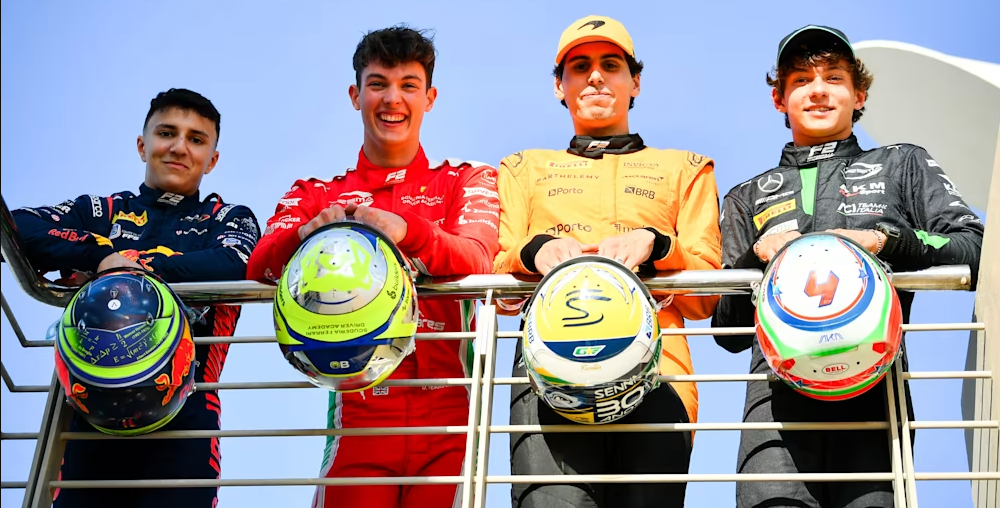

A wide range of experienced drivers make up the F1 grid, including veteran drivers like Fernando Alonso and Lewis Hamilton. However, perhaps there is nothing more exciting than the arrival of new rookies to the paddock who are just starting out on their Formula 1 journeys.
Over the course of 2025 and 2026, seven rookie drivers have taken to the Formula 1 grid. The class of 2025 rookies and Arvid Lindblad in 2026 are perhaps some of the most talented newcomers that the sport has seen in recent years. Yet, the expectations on their shoulders, and the conditions in which they are expected to achieve, are vastly different to that of rookies gone by.
Of the 2025 rookie class – Kimi Antonelli, Ollie Bearman, Gabriel Bortoleto, Franco Colapinto, Liam Lawson and Isack Hadjar – two reached the podium in their debut season. Lindblad became the 81st driver to score points on his first race weekend. He has also challenged his more experienced teammate, even at unfamiliar circuits. Despite recent rookie success, expectations have risen sharply in recent years.
Before 2025, Formula 1 last saw a major rookie wave in 2019. Alex Albon, Lando Norris and George Russell entered the grid with Toro Rosso, McLaren and Williams respectively. Teams allowed them time to adapt to the demands of Formula 1. When Red Bull promoted Alex Albon to the senior team, they extended his contract to support his development and give him time to settle.
Unspoken Expectations
Rookies in 2025 and 2026 faced immediate pressure to perform from the moment they entered Formula 1. Some arrived with more experience than others after spending different amounts of time in the feeder series, but every young driver carried the same expectation: contribute to the team’s success at the same level as their more experienced teammates.
For Liam Lawson, Formula 1 brought a turbulent start across several seasons. After just two race weekends, Red Bull’s senior team decided he was not the right long-term partner for Max Verstappen. Kimi Antonelli, meanwhile, faced enormous pressure when he stepped in at Mercedes to replace seven-time world champion Lewis Hamilton.
Many observers compare Kimi Antonelli’s career trajectory to Max Verstappen’s rise through the sport. Antonelli, widely regarded as a once-in-a-generation talent, entered Formula 1 at a time when Verstappen had just celebrated the 10th anniversary of his first Grand Prix victory with Red Bull. Verstappen’s success transformed perceptions of young drivers in Formula 1 and proved that teams could achieve results with rookies if they were willing to take the risk.
In comparison, Antonelli’s success had been a requirement and an expectation and when he failed to meet the standards such as his performances during the European part of the calendar in 2025, the criticism was extensive. Although Antonelli has certainly turned things around in his sophomore season, becoming the youngest driver to ever lead the World Driver’s Championship standings in F1 history, this was not the story of his rookie season.
The Role of Driver Academies
Another change to previous years is that teams are joining forces with drivers at much earlier stages in their careers. Rookies often begin their path to Formula 1 through driver academies. These programmes provide free practice sessions, private testing in older F1 cars, and early exposure to top-level teams. A place in an academy also signals strong interest from a leading motorsport organisation.
Among all academies, including Mercedes, McLaren and Alpine, Red Bull stands out as the most successful. Previously led by Helmut Marko and now guided by Guillaume Rocquelin, the programme has produced multiple Formula 1 stars and world champions. Its graduates include Max Verstappen, Daniel Ricciardo, Pierre Gasly and Carlos Sainz. In 2025, eight of the 20 Formula 1 drivers had either raced for Red Bull or passed through its system.
As the only rookie on the 2026 Formula 1 grid, Arvid Lindblad entered the sport under unique circumstances. His experience has likely been shaped not only by his status as the sole newcomer, but also by his place within the Red Bull family. While the programme has built a reputation for developing successful drivers, it has also become known for its high-pressure environment. Red Bull expects every driver, regardless of experience, to compete at the highest level from the start.
Feeder Series Success
A Formula 1 partnership can open doors for rookie drivers. Strong junior results can also strengthen their position. Championship titles help drivers prove their ability and potential. However, success in junior categories does not guarantee Formula 1 results. Nyck de Vries learned that after losing his seat after 11 races.
Gabriel Bortoleto won the 2024 Formula 2 championship. Isack Hadjar finished runner-up in the same season. Both experienced mixed results during their rookie Formula 1 campaigns. However, strong performances improved perceptions of their abilities. Teams also considered the limitations of their cars.
Formula 1 moves faster than ever for young drivers. Expectations have also increased sharply in recent years. Modern rookies arrive with stronger records and more Formula 1 experience. However, teams cannot create racing heroes overnight.
Featured Image: Formula 2
About The Author


Leave a Reply