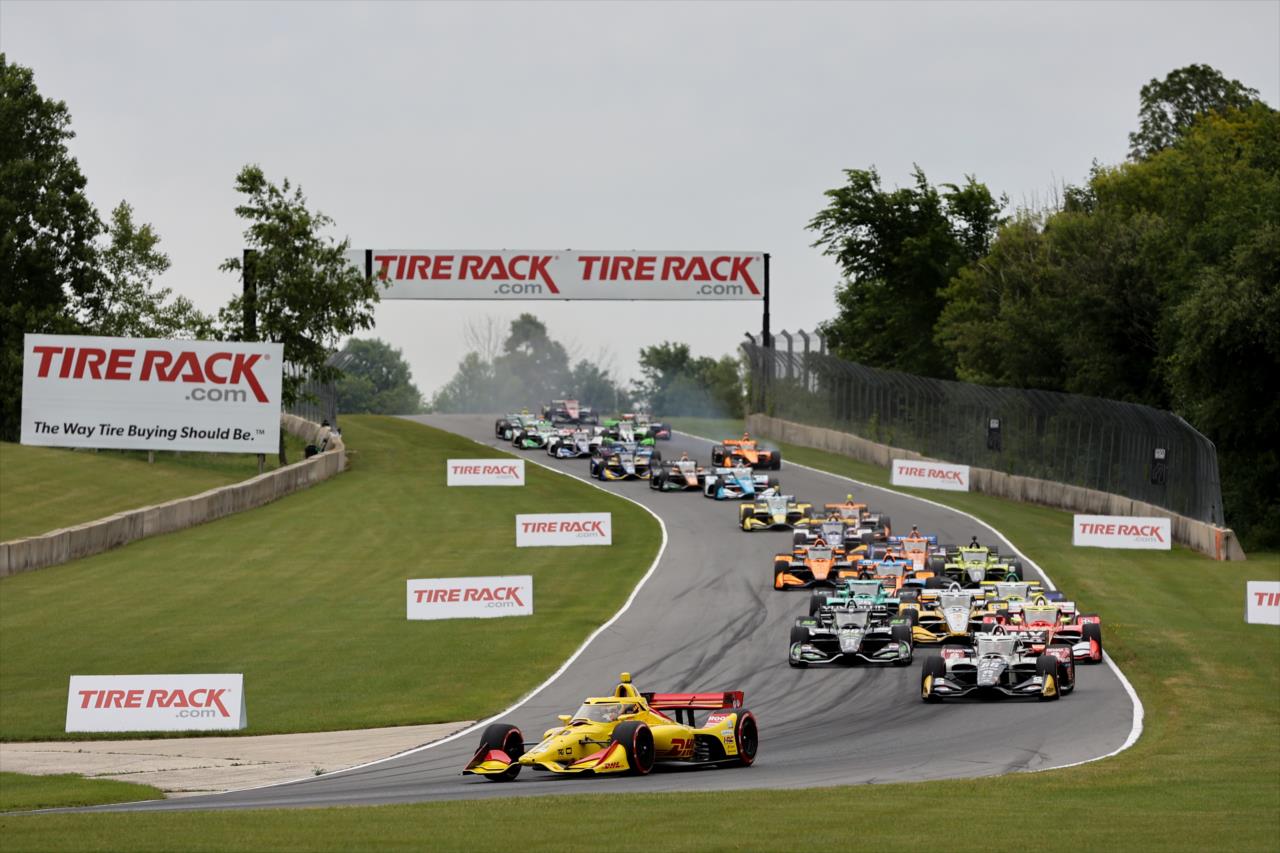

The first half of the 2026 Indycar season is now behind us, and the race to the title is still very much open. The series left Road America with a completely reshaped landscape, as a wave of major storylines is ready to define the remainder of the 2026 championship. Let’s dive into the latest news from the Indycar paddock.
Palou Chases Another Record
While race day didn’t bring a trophy, championship leader Alex Palou once again delivered a spectacular performance in qualifying. By achieving the NTT P1 Award at Road America, Palou secured his fifth consecutive pole position, and his sixth in ten races this season.
This historic feat marks the first time an IndyCar driver has secured five consecutive poles since Chip Ganassi Racing legend Alex Zanardi accomplished it across the 1996 and 1997 seasons. What makes Palou’s streak especially impressive, but worrying for the rest of the field, is his adaptability: he has grabbed the top spot across road courses, street circuits, and the Indianapolis 500 oval. Despite a pit lane speeding penalty dropping him back in Sunday’s race, a recovery to fifth place allowed him to stretch his championship lead to 60 points over David Malukas, now second in the standings, surpassing Kyle Kirkwood.

Silly Season
With the season moving into the summer stretch, the driver market is rapidly intensifying. There are many seats and free agents that could shake up the silly season, but the drivers who can challenge Palou are likely staying in their spots.
Heavy rumors are suggesting Arrow is actively looking to move on from Nolan Siegel in the No. 6 car for 2027, while Lundgaard and O’Ward are still under contract. The papaya team seems to be courting talents from European junior single-seater series, with reigning Formula 3 champion Leonardo Fornaroli and Williams F1 reserve driver Luke Browning topping their wishlist.
The Andretti powerhouse is also facing a similar situation, with Kyle Kirkwood and Will Power locked on long-term stability, and Marcus Ericsson nearing the end of his current deal. Ericsson has bounced back splendidly this year, making him one of the top targets for teams looking to fill their seats with a strong contender, as Hauger is emerging as a possible replacement.
Meyer Shank Racing is at an important crossroads: Felix Rosenqvist just won the 500 and is possibly leaving the team, while the second seat is now the focal point of the midfield. Armstrong’s latest form suggests MSR will fight hard to keep him, locking him as the first driver, but other teams are reportedly eyeing the Kiwi for a possible move.
Road America’s Dramatic Outcomes
The chaotic ending to the XPEL Grand Prix of Road America has impacted the leverage of several key drivers and the championship standings as well.
- Christian Lundgaard leads Arrow McLaren: Lundgaard’s astonishing recovery drive from last place on Lap 1 to victory lane marks his second road course win of 2026. These performances are cementing Lundgaard as Arrow McLaren’s anchor driver alongside Pato O’Ward.
- Marcus Armstrong’s statement weekend: Armstrong battled flu symptoms all weekend, yet managed to qualify a career-best third for Meyer Shank Racing. He was just a few away from his maiden Indycar victory before a sudden engine failure took it away from him. Despite the heartbreak, Armstrong’s performance this weekend has certainly proved he is a talent to look out for.
- David Malukas soars in title race: with another podium finish, Malukas has now slotted himself in second in the championship standings. So far, his first year with Team Penske has been incredibly successful, despite a race win slipping away from him on multiple occasions. Malukas is emerging as the lead Penske driver this season, showing consistency and continuing to show up at the front of the field.

Hybrid output news and changes
In other news, Indycar officials issued a major technical directive to teams just before the Road America weekend: the power units will have their electrical deployment capped by 10 to 25 percent on a race-by-race basis for the remainder of the 2026 season.
The decision stems from reliability issues and a lack of extra spare parts from repeated failures suffered by many teams. This change is expected to stabilize the system and help with the robustness of the power unit, without sacrificing lap time. Indycar is also reportedly considering the implementation of other measures if needed during the latter part of the season.
Featured image credit: insidetracknews.com
Edited by Alexandra.
About The Author


Leave a Reply