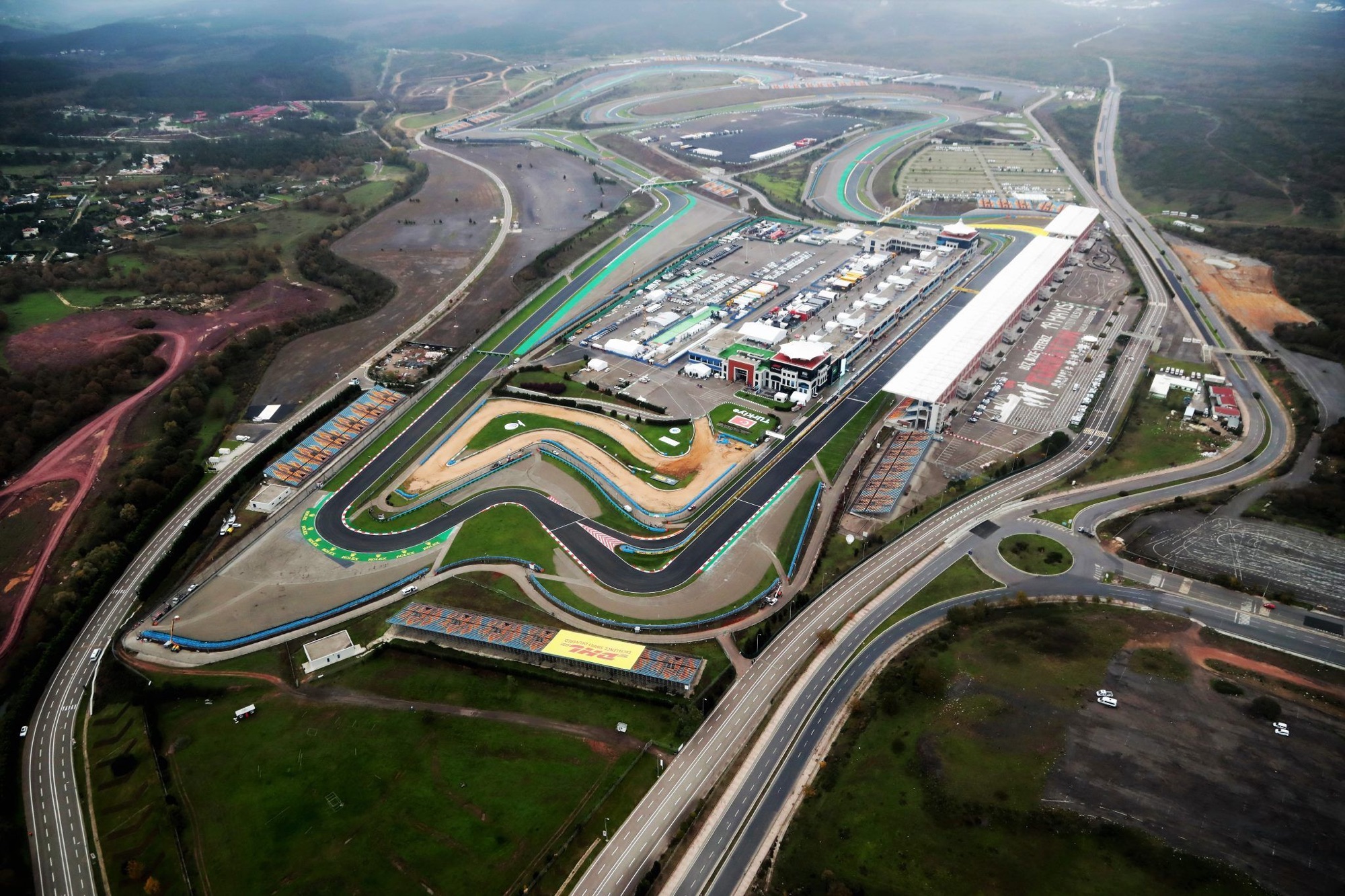

There’s something peculiar about certain circuits in the myriad of tracks Formula One has featured over the years. Not just for the racing, but importantly for its character. In 2027, one of the grid’s most beloved and feared tracks is officially making a come back.
Yes, you heard it right. Following rigorous negotiations, the Turkish Grand Prix is set to return to the Formula One calendar in 2027 on a multi-year partnership. The Turkish presidency announced that Istanbul Park will host the event for at least five years, with sources indicating that the agreement might be extended to seven years.
The announcement was made at an event in Istanbul with President Tayyip Erdoğan, F1 CEO Stefano Domenicali, and FIA President Mohammed Ben Sulayem, marking an end to years of anticipation. It’s not a one-off return, either: it is a proper homecoming for a circuit drivers have never stopped praising.
The Return of a True Driver’s Circuit

Istanbul Park last appeared on the calendar in October 2021, where Valtteri Bottas led the Turkish 2021 Grand Prix for Mercedes, followed by Max Verstappen and Sergio Pérez in a race that demonstrated the track’s difficulty even in dry conditions. (The 2020 edition, won by Lewis Hamilton, featured one of the most chaotic wet-weather spectacles of the hybrid era.)
What makes its comeback truly thrilling is the track itself. It features a fluid, high-speed first sector that encourages aerodynamic efficiency, with technical turns at medium and low speeds that put traction and balance to the test. It features one of the longest straights on the calendar, perfect for overtaking opportunities, and the infamous Turn 8 is a high-speed, sweeping left-hander that requires commitment, precision, and courage, lap after lap.

In an era dominated by street circuits and temporary venues, Istanbul Park is mostly likely going to stand out as a permanent facility with a strong character and physical demands.
Timing, Rotation, and the 24-Race Target
This revival comes as Formula One continues to move toward a more sustainable calendar plan based on rotation rather than permanent expansion. However, some sources state that it will not be a rotating track.
The sport has set a target of 24 races as a benchmark (similar to the 2026 season), with a heavy emphasis on regional grouping to cut logistics emissions.
Adding Turkey to the calendar does not imply that it will exceed 24 races from 2027 onwards. Instead, Istanbul Park is expected to rotate in, possibly replacing or alternating with other European or flyaway rounds, while keeping the overall limit.
Early signs indicate to a late-summer or early-autumn window, which might create a powerful partnership with Baku, Azerbaijan. This strategy maintains variation without overburdening the calendar.
Impact on the 2030 Net Zero Carbon Goal
Formula One remains firmly committed to its Net Zero Carbon by 2030 target, having already achieved a 26% reduction in emissions compared to the 2018 baseline despite growing the calendar in recent years. Progress has come from sustainable fuels, renewable energy at facilities, and smarter calendar planning that will therefore minimise long-haul travel.
However, the return of Turkey raises essential questions about that ambition. A well-placed European roundabout, such as Istanbul Park, might actually help sustainability if clustered locally, minimising wasteful transcontinental freight flights. However, any net addition without equivalent rotation could possibly raise logistical pressure, making the 50%+ emissions reduction more difficult to achieve.
The multi-year agreement allows Formula One and promoters time to optimise travel, which is a crucial component of the 2030 strategy.
In short, Turkey’s return tests Formula One’s capacity to offer character and excitement while remaining on track for Net Zero. Rotation, rather than unrestricted development, will be the deciding factor.
What This Means for Teams and Drivers in the New Era
With the 2026 regulation reset now in full effect, featuring heavily revised power units, active aerodynamics, and greater emphasis on energy management, Istanbul Park will serve as a fascinating benchmark.

Turn 8 is set to punish cautious setups while rewarding bold usage of the new active aero systems. Furthermore, the circuit’s mix of high-speed flows and traction zones will emphasise tyre management and energy deployment under the new regulations. In 2027, drivers will ultimately face a track that distinguishes raw talent from simulation-driven safety. The 2025/26 class rookies will receive their first taste of a modern classic, while veterans will enjoy renewing rivalries with one of the grid’s most challenging layouts.
Broader Implications for Formula One
This agreement aims to strengthens Formula One’s presence in a strategically important region, and signals a continued appetite for traditional circuits with genuine racing DNA. It also provides long-term planning stability in a cost-capped era.
For a sport navigating both explosive growth and strict sustainability targets, Turkey’s return is a reminder that heritage and ambition can coexist, provided the calendar remains disciplined.
The Bottom Line
The Turkish Grand Prix’s comeback isn’t just calendar filler. It’s the return of a proper driver’s track in an era that sometimes lacks them.
Istanbul Park will add excitement, challenge, and character from 2027, with the multi-year deal offering planning certainty without necessarily pushing the calendar beyond 24 races. F1’s 2030 Net Zero ambitions will also be tested – while smart rotation could help, poor planning runs the risk of hindering progress. The return of Turkey also means the return of the iconic Turn 8, one of Formula One’s most spectacular corners.
Formula One is returning to Turkey after being absent for much too long. As long as the sport maintains its sustainability rhythm, it benefits the grid, the fans, and the championship.
What was once a hearsay has now come to pass. The 2027 season has now become much more intriguing.
Feature image credit: formularapida.net
Edited by Reo Lane. Edited by Leslie.
About The Author


Leave a Reply