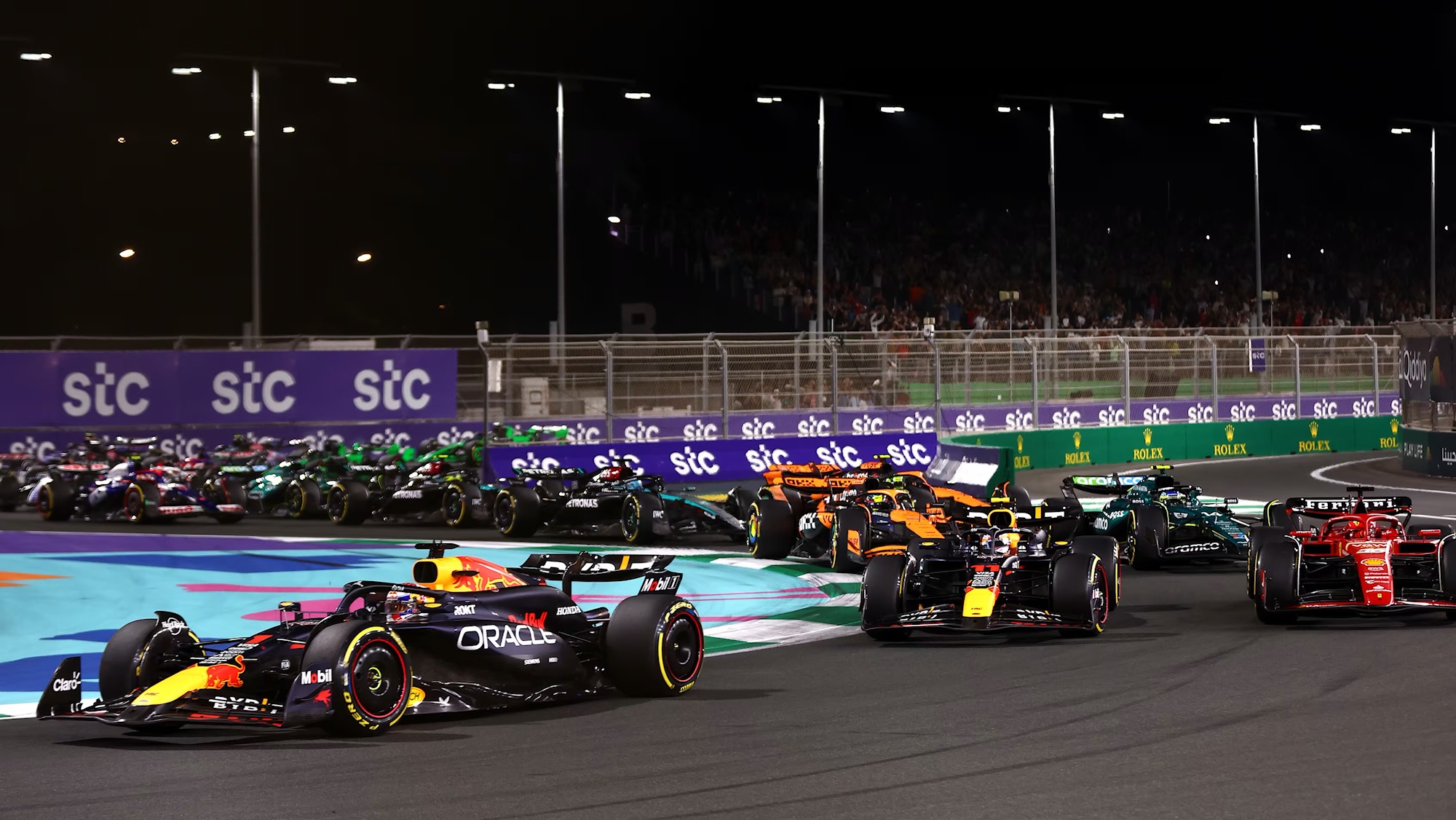

There’s a particular rhythm to a Formula 1 season. Not just through the calendar, but the cadence. Flyaway, reset, upgrade, repeat. In 2026, that rhythm has been abruptly broken.
Following a joint decision by the FIA and Formula One, the Bahrain and Saudi Arabian Grands Prix have been cancelled due to escalating conflict in the Middle East. The races will not be rescheduled, therefore reducing the season to 22 rounds from 24.
But the real impact isn’t from the number. It’s the space that has been left behind.
The Gap That Changes Everything
With Bahrain and Jeddah cancelled, we’ve got a five-week break, which means drivers can enjoy a bit of a ‘spring break’ between the early races and the Miami Grand Prix.
In today’s Formula 1, that’s pretty rare. The calendar is set up to keep things flowing smoothly, encourage ongoing feedback, allow for quick changes and keep development on track.
Now, the 2026 season seems to be coming together in tiny fragments:
- A quick start to the races.
- A longer break where everyone catches their breath.
- A fast sprint into the rest of the season
This disruption won’t just throw a wrench in the plans for the logistics and how F1 keeps things moving, but it’ll also change the preparation for the races ahead. Drivers will need to find that momentum with their car again.
Starting a Project Without a Place to Practice
This disruption is hitting at possibly the worst time, as 2026 is already set to be a fresh start with new rules.

Here are some of the main changes:
- Power units will be providing about 50% of the electrical power.
- Using fully sustainable fuels.
- The MGU-H will be gone.
- Bringing back controlled active aerodynamics.
- Focusing more on how the energy is used.
These aren’t just small changes; they’re really shaking things up for how cars drive, how energy is used and how much speed you can get out of them.
The early races are when teams check out their simulation results against what’s actually happening on the track.
But when teams lose Bahrain and Jeddah circuits with totally different setups—they miss out on crucial important info right when they need it most.
Momentum, Interrupted
In Formula 1, momentum is more than just a narrative; it’s a crucial operational factor. A strong start usually leads to compounding benefits:
- increased confidence,
- a clearer development direction,
- accelerated upgrade cycles.
But now, that whole process is thrown off.
Teams that thought they were doing well on different tracks are stuck waiting. And for those with problems, it’s like getting a very early Christmas gift: Time.
Having a whole month without racing completely changes how you make decisions.
Development Wars, Rewritten
That five-week gap gives teams a chance to catch up mid-season without having to scramble.
And when money is tight, every second counts.
So, teams like Mercedes, Ferrari, Redbull and McLaren are now in a prime spot to put their upgrades together for a big push.
For likes of midfielders that include Aston Martin, Williams, Haas and Alpine, it could be even more important.
They can think about where they want to go instead of just trying to keep up.
In this new rule, it’s often more important the direction of the teams instead of their speed.
The Hidden Regulatory Pressure
Fewer races create subtle complications for the FIA.
With reduced track time comes:
- Less reliability data
- Fewer opportunities to validate upgrades
- Greater pressure on simulation accuracy
It seems like this pressure is already shaping how race weekends are planned.

After the long break after Japan, the big changes to the rules for 2026 and the fact that sprint weekends don’t have much time to run, the FIA has said that the FP1 at the Miami Grand Prix will be 90 minutes long.
This decision comes from three things coming together: the surprise gap in the calendar, the ongoing tweaks to the cars and the fact that sprint weekends don’t have much time to race.
It might not seem like much, but it’s pretty telling.
In a season where track time is suddenly hard to find, even an extra 30 minutes can be really important for the data and eventually the race.
Fewer Races, Higher Stakes
A 22-race season might seem like it’s shortening the calendar, but it actually makes it more exciting and we’ve had them prior to 2023.
- A single DNF can have a bigger impact.
- A strategic mistake can stick around for a while.
- And when you make a successful upgrade, it can really tip the scales.
Plus, since teams are still figuring out the new power unit systems, reliability is still a bit of a gamble.
The Psychological Reset
Drivers depend on a rhythm: race, debrief, reset, repeat.
But if that cycle breaks, things get a bit more unpredictable.
A long pause can lead to:
- Overthinking things
- Fading focus
- Or a surprising moment of clarity
For new drivers, it can stop them from learning.
For seasoned drivers, it challenges their instincts without the usual repetition.
When the season kicks off in Miami again, it won’t feel like just another round.
It will feel like a fresh start.
A Championship Defined by Adaptation
What makes this situation so interesting is that it doesn’t seem to give one team an unfair edge. Instead, it’s going to reshape the trajectory of the competition.
The 2026 season is going to be more like a series of phases, with a lot of focus on development.
Plus, a new set of rules that puts energy management and being flexible at the top of the list means the focus is changing:
From being consistent → to being quick to react.
From getting everything perfect → to figuring things out as they happen.
The Bottom Line
The cancellation of two races hasn’t just made the championship shorter; it’s also changed how it’s played.
- The reason is something beyond motorsport, but the impact is all about who wins.
- It’s tougher to build momentum.
- It’s more important to develop your ideas.
- And if you mess up, it’s more costly.
Because in 2026, Formula 1 isn’t just about drivers and teams.
It’s about ideas.
And with fewer chances to show them off, getting it wrong is more expensive than ever.
Featured image credit: F1
Edited by Alexandra.
About The Author


Leave a Reply